
Public Networks
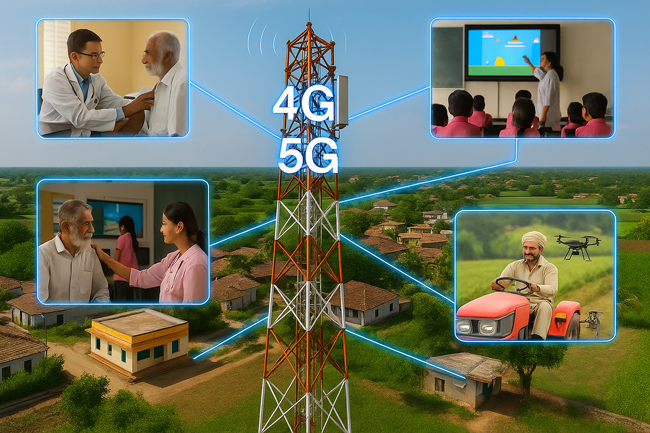
4G, and increasingly 5G NR, mobile networks are being deployed by service providers worldwide, delivering mobile voice and data services, and fixed-wireless Internet access in areas where last-mile fibre is impractical or faces rollout delays. This includes rural and remote areas which have traditionally been underserved, with many parts of the world still at 2G.
To diversify and avoid vendor lock-in – particularly amid heightened scrutiny of global telecom suppliers – a growing number of service providers are turning to the O-RAN Alliance’s 5G Open RAN, and multi-vendor deployments based on open interfaces.
Environmentally-hardened outdoor 5G RU (or 4G eNodeB) deployments with minimal footprint – not needing a tower-bottom shelter – are preferred. If required, for example for 5G CU-DUs deployed at a site due to fronthaul limitations, these should at least be software network elements running on hardened COTS servers, so air-conditioning is not needed.
RUs and eNodeBs notify the network management system (NMS) upon installation, power-up and transport network connectivity, after which they are commissioned remotely. All ongoing monitoring and maintenance is also done from the NMS, minimizing truck rolls to control OPEX.
Future Developments: Equipment providers are exploring advancements such as Non-Terrestrial Networks (NTN), and conducting R&D on 6G systems, expected to be deployed by 2030.
For more information on how Lekha’s LTE and 5G NR RAN solutions can cost-effectively meet service provider needs, please contact us at business@lekhawireless.com.